 Skip to content

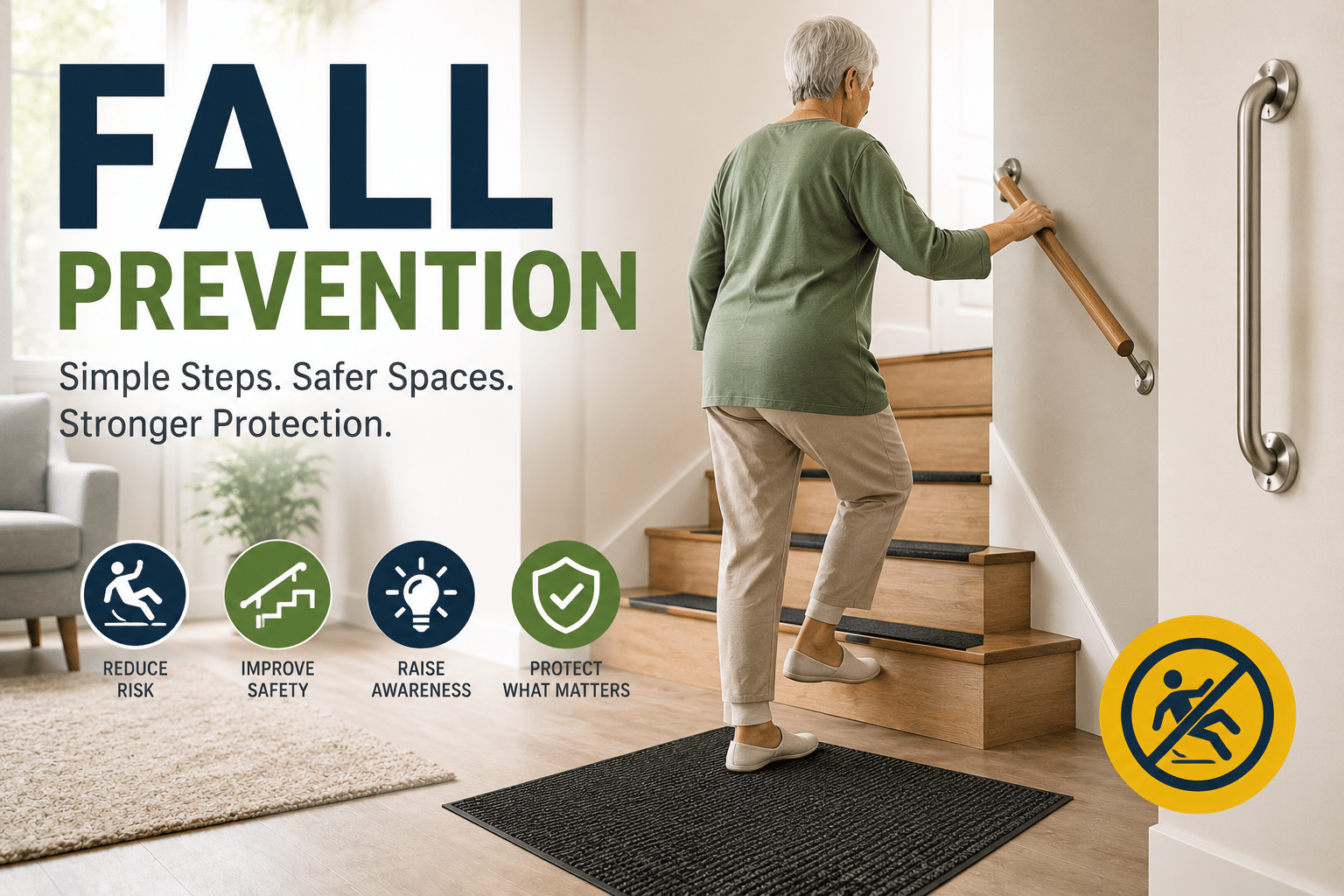
Fall prevention is one of the most important steps you can take to protect yourself and your loved ones, yet it is a topic that is often overlooked until after an accident occurs. Whether you are caring for an elderly parent, managing a commercial property, or simply want to make your own home safer, taking proactive steps can make a life-changing difference.
The good news is that most falls don’t happen by chance. They are the result of specific, identifiable hazards like wet floors, poor lighting, loose rugs, inadequate handrails, and cluttered walkways that can be addressed with the right knowledge and a little effort.
This guide covers ten practical, proven strategies to help you reduce fall risk in and around your home. From choosing the right anti-slip protection to conducting regular safety inspections, each section gives you clear, actionable steps you can implement today to create a safer environment for everyone.
Read on to discover ten practical fall prevention strategies that will help you identify hazards, make targeted improvements, and create a safer environment in and around your home.
- Install Anti-Slip Protection on Wet Floors for Effective Fall Prevention
- Improve Lighting Throughout the Home to Reduce Fall Risk
- Secure Loose Rugs, Mats, and Carpets as Part of Your Fall Prevention Plan
- Add Handrails and Grab Bars in Key Areas to Support Fall Prevention
- Keep Walkways Clutter-Free to Eliminate Tripping Hazards
- Maintain Outdoor Surfaces Properly to Prevent Slips and Falls
- Use Non-Slip Stair Nosings or Anti-Slip Tape on Stairs for Fall Prevention
- Encourage Proper Footwear Indoors and Outdoors to Lower Fall Risk
- Clean Floors Correctly to Avoid Residue Buildup and Support Fall Prevention
- Conduct Regular Home Safety Inspections to Strengthen Your Fall Prevention Strategy
Install Anti-Slip Protection on Wet Floors for Effective Fall Prevention
Wet floors are one of the leading causes of accidents in both residential and commercial environments, which is why proper surface traction plays such an important role in overall fall prevention. Areas such as bathrooms, showers, pool surrounds, kitchens, patios, and tiled entrances become extremely slippery when exposed to water, soap, oils, or moisture buildup. Many homeowners only realize how dangerous these surfaces are after a slip has already happened.
One of the most effective ways to improve fall prevention is by installing anti-slip protection on high risk walking surfaces. Products such as anti-slip treatments, coatings, tapes, and stair treads are specifically designed to help increase traction under wet conditions without necessarily changing the appearance of the floor. This makes them ideal for homes, hotels, schools, and public spaces where safety and aesthetics both matter.
Effective fall prevention starts with identifying areas where water regularly accumulates. Smooth ceramic tiles, polished concrete, marble, and painted surfaces often become hazardous when wet because they lack enough grip for safe foot traffic. Adding anti-slip protection helps create a safer walking surface and can significantly reduce the risk of serious injuries caused by slipping.
Another important part of fall prevention is choosing the correct solution for the environment. Pool areas may require UV resistant outdoor products, while bathrooms may need skin safe options designed for bare feet. By taking proactive steps and improving floor traction before an accident occurs, homeowners can create a safer environment for children, adults, guests, and elderly family members alike.
Improve Lighting Throughout the Home to Reduce Fall Risk
Poor lighting is one of the most overlooked hazards when it comes to fall prevention inside the home. Many slips, trips, and falls happen simply because people cannot clearly see obstacles, changes in floor level, or wet surfaces in time to react safely. Proper lighting plays a critical role in helping homeowners create a safer living environment for family members and visitors alike.
An effective fall prevention strategy should include evaluating all areas of the home where visibility may be limited. Staircases, hallways, garages, entrances, bathrooms, and outdoor walkways are some of the most common locations where inadequate lighting increases the risk of accidents. Even a single poorly lit step can lead to a serious injury.
Motion sensor lighting is an excellent addition to any fall prevention plan because it automatically illuminates dark areas when movement is detected. This is especially useful during the night when residents may be tired or less aware of hazards around them. Bright LED lighting can also help improve visibility while reducing energy consumption.
Another important part of fall prevention is ensuring that light switches are easily accessible and functional in all key areas of the home. Replacing burnt-out bulbs promptly and increasing lighting near slippery surfaces can make a significant difference in reducing risk. Good visibility helps people move confidently and safely throughout the home every day.
Secure Loose Rugs, Mats, and Carpets as Part of Your Fall Prevention Plan
Loose rugs, unsecured mats, and uneven carpets are some of the most common trip hazards found in residential homes, making them an important focus area for effective fall prevention. While rugs and mats may improve comfort and appearance, they can quickly become dangerous if they shift, curl at the edges, or slide across smooth flooring surfaces.
A strong fall prevention strategy should include inspecting every rug and carpet throughout the home to identify potential hazards. Entry mats, bathroom rugs, hallway runners, and decorative carpets are particularly risky because they experience frequent foot traffic. Even a small movement underfoot can cause a person to lose balance unexpectedly.
One of the easiest ways to improve fall prevention is by using non-slip rug pads or double-sided anti-slip tape underneath loose floor coverings. These solutions help keep rugs securely in place and reduce the risk of slipping or tripping. Replacing worn or damaged carpets is another important part of maintaining proper fall prevention inside the home.
Homeowners should also consider removing unnecessary rugs from high risk areas such as stair landings, kitchens, and bathrooms where moisture may increase slipping hazards. Effective fall prevention is often about eliminating small risks before they become serious accidents. By securing loose floor coverings properly, homeowners can create a safer and more stable walking environment for everyone in the household.


Add Handrails and Grab Bars in Key Areas to Support Fall Prevention
Installing handrails and grab bars throughout the home is one of the most practical and effective ways to improve fall prevention for people of all ages. These safety features provide additional support and stability in areas where slips, trips, and loss of balance are more likely to occur. They are especially important for elderly individuals, young children, and anyone recovering from surgery or injury.
A well planned fall prevention approach should prioritize locations where movement and balance are commonly challenged. Staircases, bathrooms, showers, bathtubs, entrances, and outdoor walkways are among the most critical areas for installing handrails and grab bars. Wet surfaces and changes in elevation can increase the likelihood of accidents, particularly when people have nothing nearby to hold onto for support.
Bathroom safety is a major part of any residential fall prevention strategy because smooth wet surfaces create dangerous conditions. Installing grab bars near toilets, inside showers, and next to bathtubs can help reduce the risk of slipping while entering, exiting, or moving around these spaces. Secure handrails on both sides of staircases also strengthen overall fall prevention by improving balance and confidence while walking up or down steps.
Another important aspect of fall prevention is ensuring that all handrails and grab bars are professionally installed and securely anchored. Poorly mounted safety equipment can become a hazard instead of a solution. Homeowners should also regularly inspect these fixtures for looseness or wear over time.
Effective fall prevention often comes down to small proactive upgrades that create long term safety benefits. Proper support systems throughout the home can significantly reduce injury risks while helping residents maintain independence and confidence in their daily routines.
Keep Walkways Clutter-Free to Eliminate Tripping Hazards
Keeping walkways clear and organized is one of the simplest yet most effective ways to improve fall prevention inside the home. Everyday objects that seem harmless can quickly become serious tripping hazards when left in areas where people walk frequently. Shoes, electrical cords, pet toys, bags, laundry baskets, and decorative items are all common obstacles that contribute to preventable accidents.
An effective fall prevention strategy should begin with identifying high traffic areas throughout the home. Hallways, staircases, entrances, kitchens, bedrooms, and living rooms should remain free from unnecessary clutter at all times. Even small objects left on the floor can disrupt balance and increase the risk of injury, particularly for elderly residents or individuals with reduced mobility.
Good organization also plays an important role in long term fall prevention. Homeowners should create designated storage areas for commonly used items to prevent them from accumulating in walkways. Furniture placement should allow for comfortable movement without forcing people to squeeze through narrow spaces or navigate around obstacles.
Another important aspect of fall prevention is ensuring that cords and cables are properly secured and kept away from walking paths. Loose cords stretched across floors are a major source of trips and falls in residential environments. Using cord covers or repositioning electronics can help reduce this risk significantly.
Consistent housekeeping habits are essential for successful fall prevention. Regularly checking floors for clutter, spills, or misplaced items helps create a safer environment for everyone in the household. Simple daily habits often make the biggest difference when it comes to reducing accidents and improving safety throughout the home.
Maintain Outdoor Surfaces Properly to Prevent Slips and Falls
Outdoor areas around the home can become extremely dangerous when surfaces are not properly maintained, making regular upkeep an essential part of effective fall prevention. Driveways, patios, pool surrounds, walkways, entrances, and garden paths are constantly exposed to weather conditions that can increase slipping hazards over time.
A strong fall prevention plan should include routine inspections of all outdoor walking surfaces. Cracked concrete, loose paving stones, uneven tiles, and damaged decking can create serious trip hazards for residents and visitors. Moss, algae, dirt buildup, and standing water are also common problems that reduce traction and make surfaces far more slippery, especially after rain or pool use.
Proper drainage is another important factor in successful fall prevention. Water that collects on outdoor surfaces increases the risk of slips and can gradually damage flooring materials if left unresolved. Homeowners should ensure that gutters, drains, and surrounding landscaping direct water away from frequently used walkways and entrances.
Regular cleaning also plays a major role in outdoor fall prevention. Pressure washing, sweeping debris, and removing organic growth can help restore grip and improve walking safety. In high risk areas such as pool decks and smooth tiled patios, applying anti-slip products may provide additional traction under wet conditions.
Effective fall prevention outdoors requires proactive maintenance instead of waiting for accidents to happen. Small issues that seem minor today can quickly become serious hazards over time. By keeping outdoor surfaces clean, level, and slip resistant, homeowners can create a safer environment for family members and guests throughout the year.
Use Non-Slip Stair Nosings or Anti-Slip Tape on Stairs for Fall Prevention
Staircases are one of the highest risk areas in both residential and commercial properties, which is why improving stair safety should be a major priority in any fall prevention strategy. A single missed step or loss of traction can quickly lead to serious injuries, especially on smooth tiled, wooden, painted, or concrete stairs.
One of the most effective ways to strengthen fall prevention on staircases is by installing non-slip stair nosings or anti-slip tape. These products are specifically designed to improve grip underfoot and help reduce the risk of slipping while moving up or down stairs. They are particularly valuable in areas exposed to moisture, heavy foot traffic, or changing weather conditions.
A good fall prevention plan should focus on the leading edge of each step because this is where most slips occur. Anti-slip stair nosings create additional traction exactly where foot contact is most critical, while also improving step visibility in some environments. Anti-slip tape provides a fast and cost effective fall prevention solution for homes, schools, workplaces, and outdoor staircases.
Another important part of fall prevention is selecting the correct product for the specific environment. Outdoor stairs may require UV resistant and weatherproof materials, while indoor areas may benefit from more discreet solutions that blend with the surrounding décor. In homes with children or elderly residents, improving stair traction can make a significant difference in everyday safety.
Proper installation and regular maintenance are also essential for long term fall prevention. Worn or damaged anti-slip materials should be replaced promptly to ensure consistent performance. By improving stair traction proactively, homeowners can significantly reduce one of the most common causes of serious fall related injuries.
Encourage Proper Footwear Indoors and Outdoors to Lower Fall Risk
Wearing the correct footwear is an often overlooked but extremely important part of effective fall prevention. Many slips and falls occur not because of the floor itself, but because shoes or slippers do not provide enough traction for the walking surface. Smooth soles, worn footwear, and inappropriate shoes can significantly increase the risk of losing balance, especially on wet or polished floors.
A strong fall prevention strategy should encourage family members and visitors to wear supportive footwear both indoors and outdoors. Slippers with little grip, flip-flops, high heels, and worn-out shoes are common contributors to household accidents. In areas such as bathrooms, kitchens, patios, and pool surrounds, proper traction underfoot becomes even more important because moisture can quickly make surfaces slippery.
Good footwear plays a valuable role in everyday fall prevention by helping people maintain stability and confidence while walking. Shoes with non-slip soles and proper support can improve balance and reduce the likelihood of sudden slips or missteps. This is especially important for elderly individuals who may already experience reduced mobility or balance challenges.
Another important aspect of fall prevention is replacing footwear once soles become smooth or damaged. Even high quality shoes lose effectiveness over time if tread patterns wear down. Homeowners should also avoid walking barefoot in high risk outdoor areas where surfaces may become wet or uneven.
Creating awareness around safe footwear habits is a simple yet highly effective way to support long term fall prevention. When combined with proper floor maintenance and anti-slip solutions, the right footwear can help create a much safer environment for everyone inside and outside the home.
Clean Floors Correctly to Avoid Residue Buildup and Support Fall Prevention
Proper floor cleaning is an essential part of maintaining a safe environment and improving long term fall prevention. Many homeowners assume that if a floor looks clean, it must also be safe. Unfortunately, certain cleaning products and poor cleaning habits can leave behind invisible residue that makes floors more slippery over time.
An effective fall prevention strategy should include using the correct cleaning products for the specific flooring surface. Some soaps, waxes, polishes, and chemical cleaners create a thin film that reduces traction, especially on smooth tiles, polished concrete, marble, and vinyl flooring. This buildup may not always be visible, but it can dramatically increase the risk of slipping when surfaces become wet.
Regular maintenance is an important part of successful fall prevention because dirt, grease, oils, and moisture can accumulate gradually and reduce floor grip. Kitchens, bathrooms, entrances, and poolside areas are particularly vulnerable because they experience frequent exposure to water and contaminants. Using a neutral pH cleaner designed for floor safety can help maintain traction without damaging the surface.
Another key part of fall prevention is ensuring that floors are rinsed and dried properly after cleaning. Leaving excess water or cleaning solution on the floor can create dangerous conditions, especially for children, elderly residents, and guests unfamiliar with the area.
Homeowners should also establish consistent cleaning schedules to prevent long term residue buildup. Effective fall prevention is not only about installing anti-slip products but also about maintaining the floor correctly after treatment or installation. By cleaning floors properly and avoiding slippery residue accumulation, homeowners can significantly reduce the risk of accidents while keeping their living spaces cleaner, safer, and more comfortable for everyday use.
Conduct Regular Home Safety Inspections to Strengthen Your Fall Prevention Strategy
Regular home safety inspections are one of the most proactive ways to improve fall prevention and reduce the likelihood of accidents before they occur. Many hazards develop gradually over time, which means homeowners may stop noticing dangerous conditions that have become part of the everyday environment.
A thorough fall prevention inspection should include both indoor and outdoor areas of the property. Homeowners should look for loose tiles, uneven flooring, cracked walkways, slippery surfaces, poor lighting, unsecured rugs, damaged stair edges, and cluttered pathways. Identifying these risks early allows problems to be corrected before they lead to injuries.
An effective fall prevention routine also involves checking high risk areas such as bathrooms, kitchens, staircases, entrances, patios, and pool surrounds where slips and trips are more likely to happen. Even small issues like water leaks, worn anti-slip materials, or loose handrails can significantly increase safety risks if ignored.
Another important part of fall prevention is evaluating whether current safety measures are still performing properly. Anti-slip treatments, tapes, stair nosings, and grab bars should be inspected regularly to ensure they remain secure and effective over time. Environmental conditions, heavy foot traffic, and weather exposure can gradually reduce performance if maintenance is neglected.
Consistent inspections help homeowners stay aware of changing conditions throughout the property and support long term fall prevention efforts. Safety should never be treated as a once-off task. By routinely assessing the home for hazards and addressing concerns quickly, families can create a safer environment that helps protect children, adults, elderly residents, and visitors from preventable falls.
Conclusion
Creating a safer home environment starts with taking a proactive approach to fall prevention in every area of the property. From installing anti-slip protection on wet floors to improving lighting, securing loose rugs, and maintaining outdoor surfaces, each step plays an important role in reducing the risk of slips, trips, and injuries. Small hazards that are often ignored can quickly become serious dangers when left unresolved.
An effective fall prevention strategy also includes improving staircase safety with anti-slip stair nosings or tape, encouraging proper footwear, cleaning floors correctly to avoid slippery residue buildup, and installing handrails or grab bars in key areas of the home. These practical improvements help create safer movement throughout the property for children, adults, elderly residents, and guests alike.
Regular inspections are equally important for long term fall prevention because hazards can develop gradually over time. Identifying and correcting risks early helps prevent accidents before they happen and ensures that existing safety measures continue performing properly.
Successful fall prevention is not about relying on a single solution. It is about combining smart maintenance, awareness, proper cleaning practices, and reliable anti-slip products to create a safer living environment overall. By making safety a priority today, homeowners can help protect their families, improve confidence around the home, and significantly reduce the likelihood of preventable falls in the future.
Why Homeowners Trust Slip No More for Fall Prevention Solutions
When it comes to protecting families from slips and falls, Slip No More has become a trusted name in professional floor safety solutions. Founded in 2006, the company has helped homeowners, businesses, schools, hotels, and commercial facilities improve traction on slippery surfaces without completely changing the appearance of the floor.
Effective fall prevention often requires more than simply placing warning signs or mats around dangerous areas. specializes in practical anti-slip solutions designed to improve grip on wet and slippery surfaces such as bathrooms, pool decks, kitchens, tiled walkways, patios, and staircases. Their range includes anti-slip treatments, tapes, stair nosings, coatings, and other floor safety products suited for both residential and commercial use.
One of the reasons homeowners choose Slip No More is because the company focuses heavily on long term fall prevention instead of temporary fixes. Many of their solutions are designed to help increase traction while maintaining the natural appearance of the surface.
As awareness around residential safety continues to grow, more property owners are realizing the importance of proactive fall prevention measures before accidents occur. By combining education, quality products, and years of industry experience, continues to help create safer living environments for families across multiple industries and applications.
Follow Slip No More on Facebook, Instagram & YouTube for floor safety tips, real world fall prevention examples, product updates, and educational content designed to help homeowners create safer living spaces. You can also connect with Slip No More on LinkedIn to stay informed about the latest developments in commercial and residential fall prevention solutions.


