
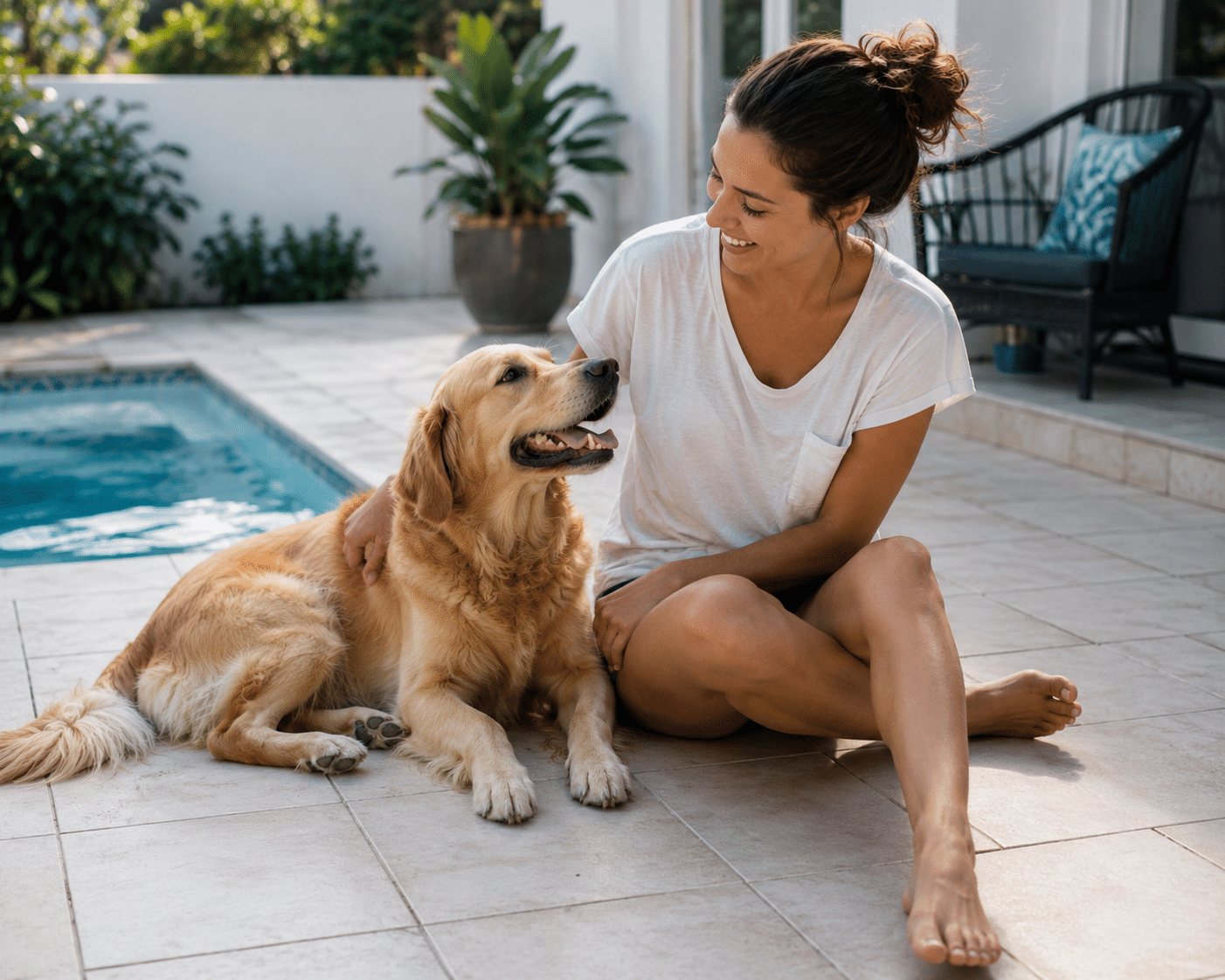
Why Slippery Tiles Are Dangerous for Pets
Pets and slippery tiles are a common concern for homeowners, especially in kitchens, bathrooms, patios, and pool areas. Many people do not realize how dangerous slippery tiles can become for both humans and animals until a slip or fall happens. While tile floors may look stylish and easy to clean, pets and slippery tiles often do not work well together because smooth surfaces provide very little grip under paws. Whether a dog is running to greet its owner or a cat is jumping off furniture, pets and slippery tiles can quickly lead to slips, falls, and injuries.
Many homeowners underestimate how much pets and slippery tiles affect a pet’s confidence and mobility. Dogs may start walking slowly across tiled areas, while cats may avoid certain rooms altogether. In homes with older animals, pets and slippery tiles become an even bigger concern because aging joints, arthritis, and reduced stability increase the risk of accidents.
Wet areas make the situation worse. Kitchens, bathrooms, patios, and pool surrounds are common places where pets and slippery tiles create hazardous conditions. Water, soap residue, or polished finishes can make surfaces extremely slick under a pet’s paws.
Over time, pets and slippery tiles may also place unnecessary strain on muscles and joints due to constant slipping and bracing while walking. Some pets even develop anxiety around tiled surfaces because they no longer feel secure moving around the home.
Understanding the risks associated with pets and slippery tiles is an important step toward creating a safer and more comfortable environment for your furry family members.
Signs Your Pet Is Struggling on Tile Floors
Pets and slippery tiles often create problems that homeowners fail to notice immediately. However, small warning signs usually appear first.
For example, your dog may walk slower across tiled areas. In addition, some pets spread their legs wider for balance. Cats may also hesitate before jumping onto smooth surfaces. Consequently, pets begin avoiding certain rooms entirely. Pets and slippery tiles can also cause claws to slide during sudden movements. As a result, pets may lose confidence indoors.
Older animals are especially vulnerable because weaker joints reduce stability. Therefore, slips become more dangerous with age. You may also hear nails scraping loudly across the floor. Meanwhile, some pets struggle when turning corners quickly. Pets and slippery tiles become even riskier around water. Bathrooms, kitchens, and patios usually create the biggest challenges.
Fortunately, improving traction can help pets move more comfortably. Furthermore, safer flooring may reduce stress and anxiety inside the home. Many owners ignore these signs at first. However, pets and slippery tiles should never be overlooked. Recognizing problems early helps protect your pet from unnecessary injuries. Most importantly, pets and slippery tiles should be addressed before a serious fall occurs.
See how businesses and homeowners across South Africa trust Slip No More Clients for professional floor safety solutions.
The Most Common Areas Where Pets Slip
Pets and slippery tiles often become a problem in busy household areas. However, many homeowners overlook these dangerous spaces daily.
Kitchens are one of the most common locations for accidents. Food spills and water quickly create slippery conditions for pets. Furthermore, polished kitchen tiles usually offer very little traction under paws. As a result, pets and slippery tiles become a serious safety concern during feeding times.
Bathrooms also present major risks for animals. Soap residue and moisture make tile surfaces extremely slick. In addition, excited pets often run into bathrooms after their owners. Consequently, pets and slippery tiles may lead to sudden falls or strained joints in these spaces.
Outdoor areas can also become hazardous when wet. Pool surrounds, patios, and entrances regularly collect water during cleaning or rainfall. Meanwhile, smooth outdoor tiles become even more slippery under changing weather conditions. Therefore, pets and slippery tiles should never be ignored around entertainment areas.
Hallways and entryways create another hidden danger for pets. Dogs frequently sprint toward doors when visitors arrive home. However, smooth tiles reduce grip during quick turns or sudden stops. Over time, pets and slippery tiles may affect confidence and mobility indoors. Fortunately, improving traction in high-risk areas helps create a safer environment for every family member.
Want to learn more about our story and experience in floor safety? Visit About Slip No More.
How to Make Slippery Tiles Safer Without Ruining the Look of Your Floors
Pets and slippery tiles do not mean homeowners must sacrifice beautiful flooring. Fortunately, several solutions improve traction without changing your floor’s appearance.
Rugs and runners help reduce slipping in high-risk areas. However, they should include non-slip backing for additional stability. Furthermore, washable mats work well near food bowls, entrances, and bathrooms. As a result, pets and slippery tiles become easier to manage indoors.
Regular cleaning also improves floor safety significantly. Dirt, grease, and soap residue often increase slipperiness on smooth tiles. Therefore, using the correct floor cleaner becomes extremely important for pet owners. In addition, quick cleanup of spills helps reduce unnecessary accidents around the home.
Many homeowners also choose professional anti-slip treatments for tiled surfaces. These treatments create invisible micro-treads that improve grip under wet conditions. Consequently, pets and slippery tiles become less dangerous without affecting the floor’s design. Unlike bulky mats, treated tiles still maintain a clean and modern appearance.
Outdoor areas deserve attention as well. Pool surrounds and patios become extremely slippery during rain or regular cleaning. Meanwhile, older pets often struggle most on these wet surfaces. Therefore, improving traction outdoors helps create safer movement throughout the property.
Small changes can make a major difference for pets. Most importantly, pets and slippery tiles should never become a daily safety risk inside the home.
Older Pets and Slippery Floors, Why Traction Matters More With Age
As pets grow older, movement often becomes slower and more difficult. Therefore, traction plays a much bigger role in daily comfort.
Senior dogs and cats commonly experience arthritis, joint pain, and reduced muscle strength. Consequently, smooth floors become harder to navigate safely. Pets and slippery tiles create additional pressure on aging joints during normal movement. Furthermore, sudden slips may cause serious injuries for older animals.
Many senior pets also lose confidence while walking across tiled surfaces. For example, some pets hesitate before entering kitchens or bathrooms. Others struggle while standing up after resting on smooth flooring. As a result, pets and slippery tiles may affect mobility throughout the entire home.
Wet areas become especially dangerous for older animals. Pool surrounds, patios, and laundry rooms often create slippery walking conditions. Meanwhile, weaker muscles reduce balance and coordination during quick movements. Therefore, pets and slippery tiles should never be ignored in areas exposed to moisture.
Improving traction can help older pets feel safer and more independent indoors. Fortunately, small adjustments often make a noticeable difference quickly. Rugs, runners, and anti-slip treatments help improve grip without changing the floor’s appearance. In addition, keeping floors clean and dry reduces unnecessary slipping risks daily.
Many pet owners only recognize the problem after an accident occurs. However, pets and slippery tiles should be addressed before injuries happen. Creating safer walking surfaces helps older pets move confidently and comfortably for longer.
Need help making your floors safer for pets and family members? Contact the team at Slip No More Contact Us today.
The Emotional and Physical Impact of Slip Injuries on Pets
A slip and fall can seriously affect a pet’s health and confidence. Unfortunately, many injuries happen suddenly and without warning.
Pets often experience pain, fear, and confusion after slipping on hard surfaces. In some cases, injuries require expensive veterinary treatment or surgery. Furthermore, pets and slippery tiles can contribute to fractures, muscle strains, and damaged joints over time.
According to veterinary studies, fractures are among the most common traumatic injuries in household pets. Many of these accidents happen indoors on smooth flooring surfaces. In addition, older dogs face higher risks because weaker joints reduce stability and balance. Therefore, pets and slippery tiles become especially dangerous for aging animals.
After an injury, recovery can become stressful for both pets and owners. Some animals require restricted movement, medication, or physical rehabilitation for several weeks. Meanwhile, nervous pets may develop anxiety around tiled areas after falling previously. Consequently, pets and slippery tiles may affect long-term confidence inside the home.
Certain pets also stop running, jumping, or playing normally after an accident. As a result, their quality of life may gradually decline over time. Fortunately, improving traction helps reduce unnecessary slipping risks throughout the property.
Simple safety improvements can help protect pets from painful accidents indoors. Most importantly, pets and slippery tiles should never be ignored after warning signs appear. Preventing one serious fall may save a pet from long-term pain and mobility problems.
Learn how Slip No More helps homeowners create safer walking surfaces without changing the appearance of their tiles.
The Financial Cost of Pet Injuries Caused by Slippery Floors
A slip and fall injury can quickly become expensive for pet owners. Unfortunately, treatment costs often rise faster than expected.
Broken bones commonly require X-rays, consultations, medication, and follow-up appointments. In severe cases, pets may also need surgery or rehabilitation therapy. Furthermore, pets and slippery tiles can increase the likelihood of repeated accidents inside the home.
Veterinary fracture treatment can cost hundreds or even thousands of dollars. The final cost usually depends on the injury’s severity and required procedures. In addition, emergency veterinary visits often carry higher fees during evenings or weekends. Therefore, pets and slippery tiles may create unexpected financial pressure for many families.
Recovery expenses also continue after the initial treatment. Some pets require mobility aids, pain medication, or special recovery spaces indoors. Meanwhile, owners may need additional time away from work during rehabilitation periods. Consequently, pets and slippery tiles can affect both emotional wellbeing and household finances.
Older pets often face longer recovery times after serious injuries. As a result, treatment plans may become more complex and expensive over time. Fortunately, preventative safety measures usually cost far less than emergency veterinary care.
Improving traction around the home helps reduce unnecessary slipping risks for pets. Most importantly, pets and slippery tiles should never become an avoidable financial burden. Creating safer walking surfaces today may help prevent costly injuries tomorrow.
Explore more expert advice and floor safety tips in our Floor Safety Articles section.
Different Floor Safety Solutions for Stairs, Ramps, and Walkways
Pets and slippery tiles can create serious risks on stairs, ramps, and walkways around the home. Fortunately, several professional floor safety solutions are available.
For tiled surfaces, anti-slip treatments are one of the most effective options available. These treatments create invisible micro-treads that improve traction under wet conditions. Furthermore, they do not noticeably change the floor’s appearance after application. As a result, pets and slippery tiles become safer without affecting the design of the space. Learn more about Anti-Slip Treatments for residential and commercial areas.
Non-slip coatings also work well in high-risk environments. These coatings add additional grip to surfaces exposed to constant moisture or heavy traffic. In addition, they are commonly used around pool surrounds, ramps, and outdoor walkways. Therefore, pets and slippery tiles become easier to manage in challenging areas. Explore the range of Non-Slip Coatings available from Slip No More.
Hardware products such as stair nosings and safety strips improve traction on stair edges and ramps. Meanwhile, proper floor maintenance also helps preserve slip resistance over time. Consequently, pets and slippery tiles should always be supported by correct cleaning practices. Browse Hardware Solutions and Cleaning & Maintenance Products for safer everyday flooring.
With the right products, pets and slippery tiles no longer need to become a constant household concern.
Follow Slip No More for Floor Safety Tips and Updates
Pets and slippery tiles are common concerns for many homeowners today. Therefore, Slip No More shares helpful safety advice across multiple social platforms.
Professionals and business owners can follow Slip No More on LinkedIn for industry insights and commercial floor safety discussions. In addition, LinkedIn is ideal for facility managers, contractors, and safety professionals seeking practical solutions.
Homeowners researching trusted floor safety products can also visit Slip No More on Trustpilot to read customer experiences and reviews. Meanwhile, Slip No More on X provides quick updates, safety tips, and company news in real time.
For visual content and everyday safety inspiration, follow Slip No More on Instagram. This platform suits homeowners, designers, and families wanting safer living spaces without sacrificing appearance. Furthermore, Slip No More on Facebook shares community updates, educational content, and product information for broader audiences.
Training videos and product demonstrations are available on Slip No More YouTube. Consequently, installers and DIY users can learn proper application techniques. For short, engaging safety videos, visit Slip No More on TikTok and discover creative floor safety content daily.


